


The rapid growth of online platforms supporting the sharing and gig economy has created new opportunities for individuals to earn income. However, traditional tax systems were not built to correctly capture the high level of activity occurring on these platforms. In response, the OECD (Organisation for Economic Co-operation and Development) published the Model Rules for Digital Platforms (MRDP), establishing a global standard for digital platform reporting of income to local tax authorities.
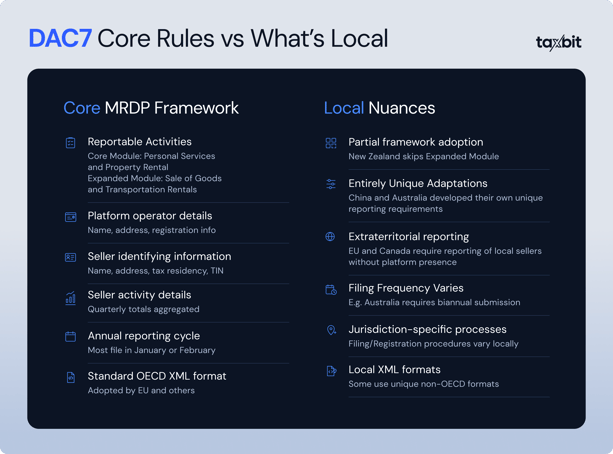
The original MRDP framework published by the OECD specifically covered reporting related to personal services and real estate rental. An expanded module added reporting guidelines for the sale of goods and vehicle rentals.
The European Union (EU) was the first region to implement the OECD’s Model Reporting Rules for Digital Platforms through DAC7 with the first reporting year in 2023. DAC7 reporting includes both the original module as well as the expanded module. EU Member States implemented DAC7 into their domestic legislation, creating a consistent overall framework while retaining local requirements for registration, filing, and administration.
Following the EU adoption, many other jurisdictions have adopted the MRDP framework, often with their own local nuances. For marketplaces operating across borders, this creates a need to manage local rules alongside the broader reporting framework. The work begins before filing season, with processes for identifying reportable sellers, collecting and verifying required information, and preparing activity data for submission.
DAC7 generally applies to digital platforms that connect sellers with buyers to provide relevant activities and facilitate payments for those activities. Platforms that only advertise relevant activities without facilitating payment may fall outside the Reporting Platform Operator definition.
A platform’s geographic reach can also impact where they might be required to submit reports. While some jurisdictions only require local, resident platforms to submit a filing, others, including DAC7 in the EU, require non-resident platforms to report information about local sellers.
This distinction is particularly important for international platforms. A platform may have no local corporate presence in a country but still have reporting obligations because it facilitates transactions involving sellers who are tax resident there.
The relevant activities covered by the DAC7/MRDP framework include:
Not every jurisdiction has adopted all four categories of income. For example, New Zealand has adopted only the original MRDP framework, but not the optional module covering sales of goods and vehicle rentals. DAC7 in the EU encompasses all four categories of income.
Where a platform operates internationally, it is essential to understand the specific requirements in each reporting country in order to ensure compliance with local standards.
An annual digital platform report generally includes three categories of information:
A suggested filing format (XML) has been prepared by the OECD and adopted directly by the EU as well as many other countries. The MRDP guidance includes very detailed information on how to prepare a compliant XML file for Digital Platform Reporting.
Many countries have directly adopted the OECD standard filing format, while others have developed their own, entirely unique format for local filing. However, even the standard format allows certain details to be defined locally, so the details of the filing can differ even among countries that have adopted the OECD standard.
The OECD framework generally follows an annual reporting cycle, but filing frequency, deadlines, and submission requirements vary by jurisdiction. Most MRDP jurisdictions require annual reporting due in either January or February each year. However, Australia notably requires semi-annual submission of reports.
Filing logistics (“where/how to file”) are also defined locally, and vary widely by jurisdiction. They can range from a simple upload portal with basic credentials, to a required Machine-to-Machine submission process that necessitates extensive configuration for the filer prior to submission. Great care should be taken by new filers to understand if there are local registration, systems access, or software requirements needed prior to the submission deadline.
Collecting information at the end of the reporting period can create unnecessary pressure, and is likely to result in data gaps that hinder compliance. A more reliable process connects seller data with transaction activity throughout the year.
Marketplace teams should establish effective, repeatable procedures for collecting seller data up front. Procedures would define where required seller information is collected, how it is verified, and how it flows into the final report.
In addition, they also need processes for normalizing and aggregating high volumes of transaction data, managing jurisdiction-specific requirements, and identifying missing information early enough to resolve it.
This approach helps marketplaces prepare for filing while building a stronger foundation for other digital platform reporting obligations.
DAC7 is one implementation of a broader shift toward platform-based Information Reporting. Marketplaces that develop a reliable process for collecting seller data, managing transaction activity, and producing jurisdiction-specific reports can be better prepared as reporting requirements expand across regions.
For a deeper look at MRDP fundamentals, country-specific differences, duplicative reporting, compliance challenges, and automation, read Taxbit’s Navigating Global Requirements for Digital Platform Reporting or Schedule a demo to see how it maps to your business.