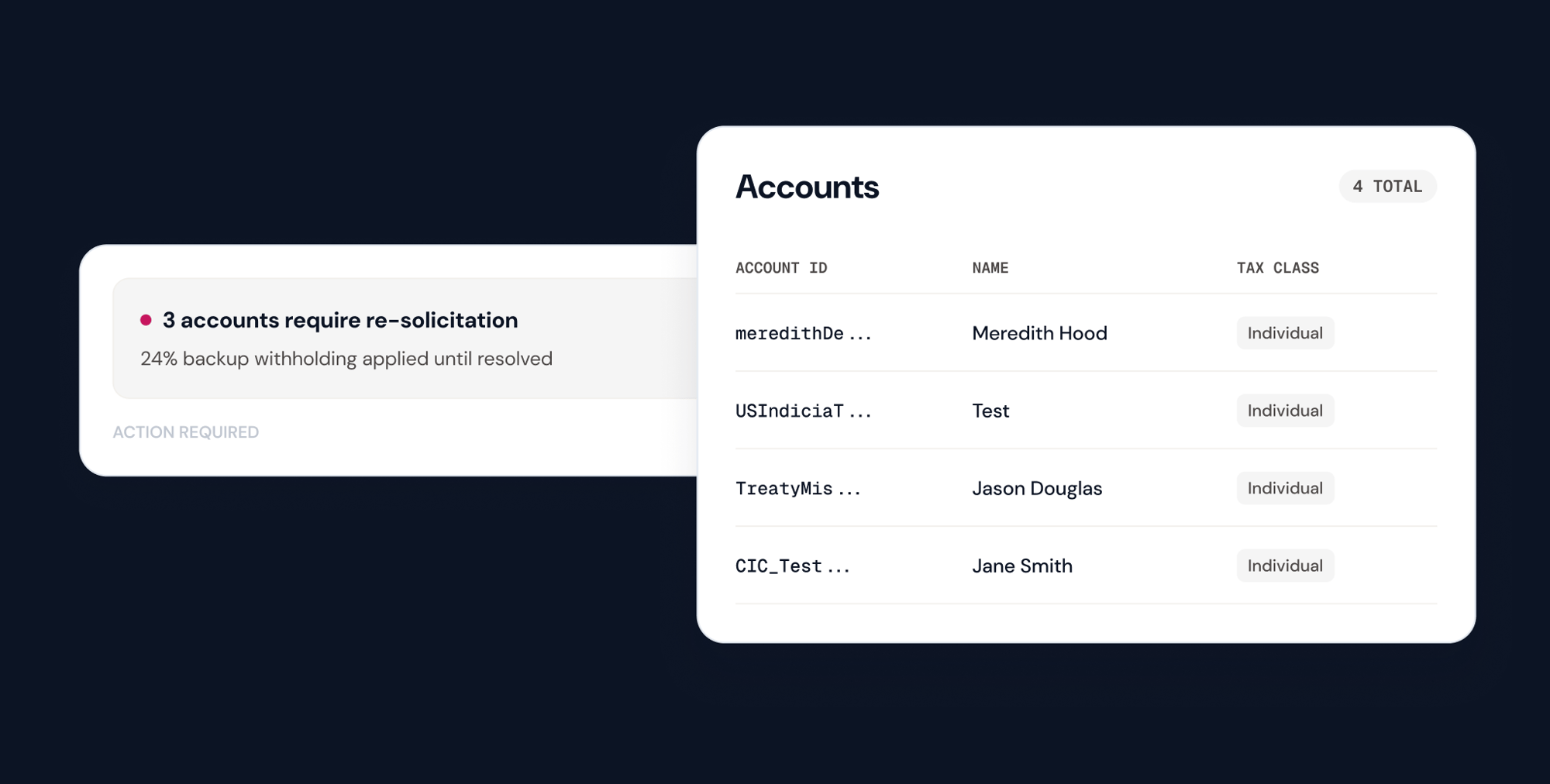

TIN & VAT matching, verified before it becomes a filing problem.
One check, run where it matters.
The moment an account opens, and across the book you already have.
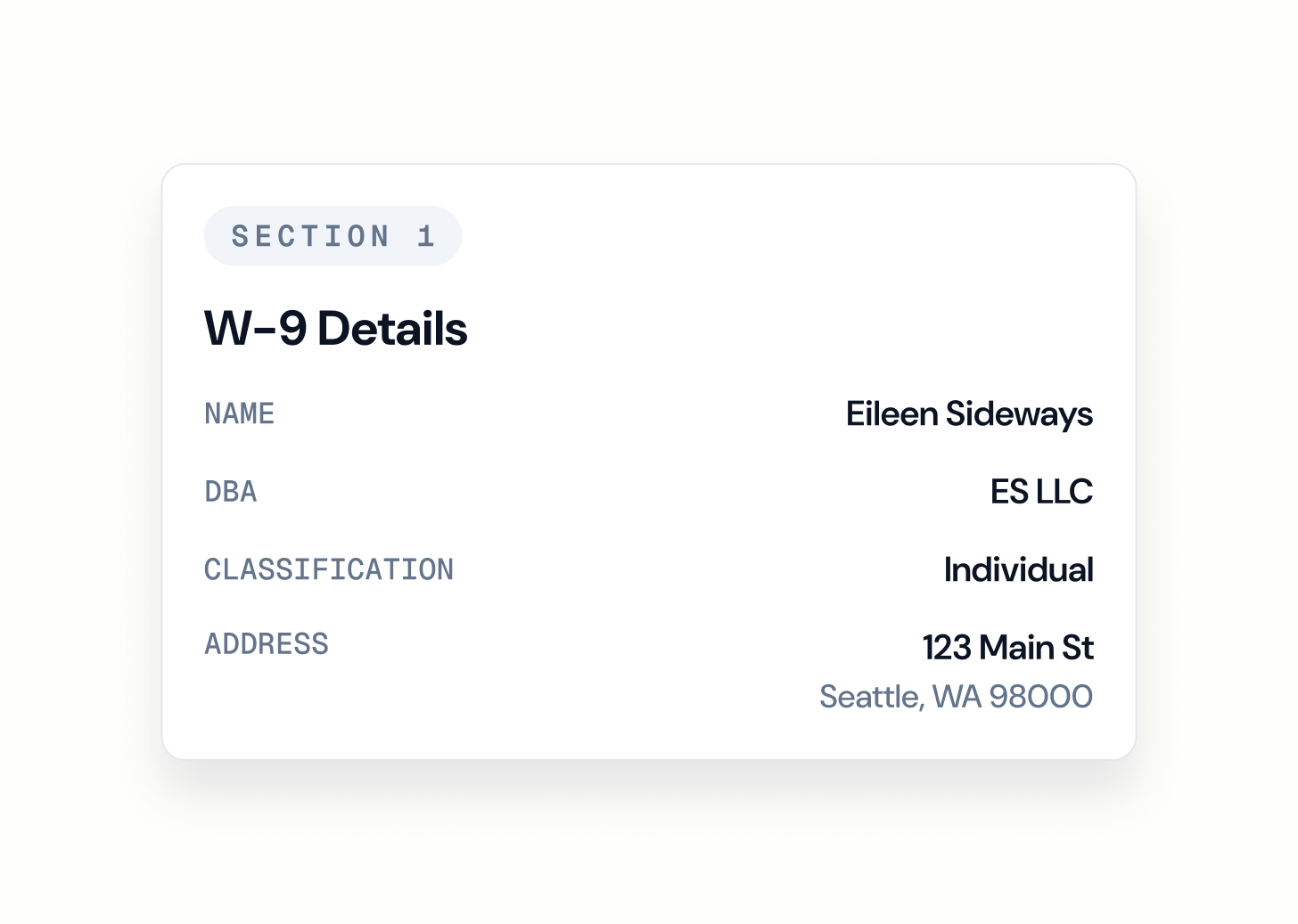
Checked while the account opens.
Name and TIN are matched against IRS records during the W-9 flow. Foreign TIN formats are checked across 200+ supported jurisdictions, while eligible EU VAT numbers are validated through VIES. Results are tied to the account and surfaced in status reports
Re-verified across the book you already have.
Accounts opened before checks were in place stay unverified until they're re-run. Taxbit re-reruns the same validation across the book, on demand.
Every check, on record before filing.
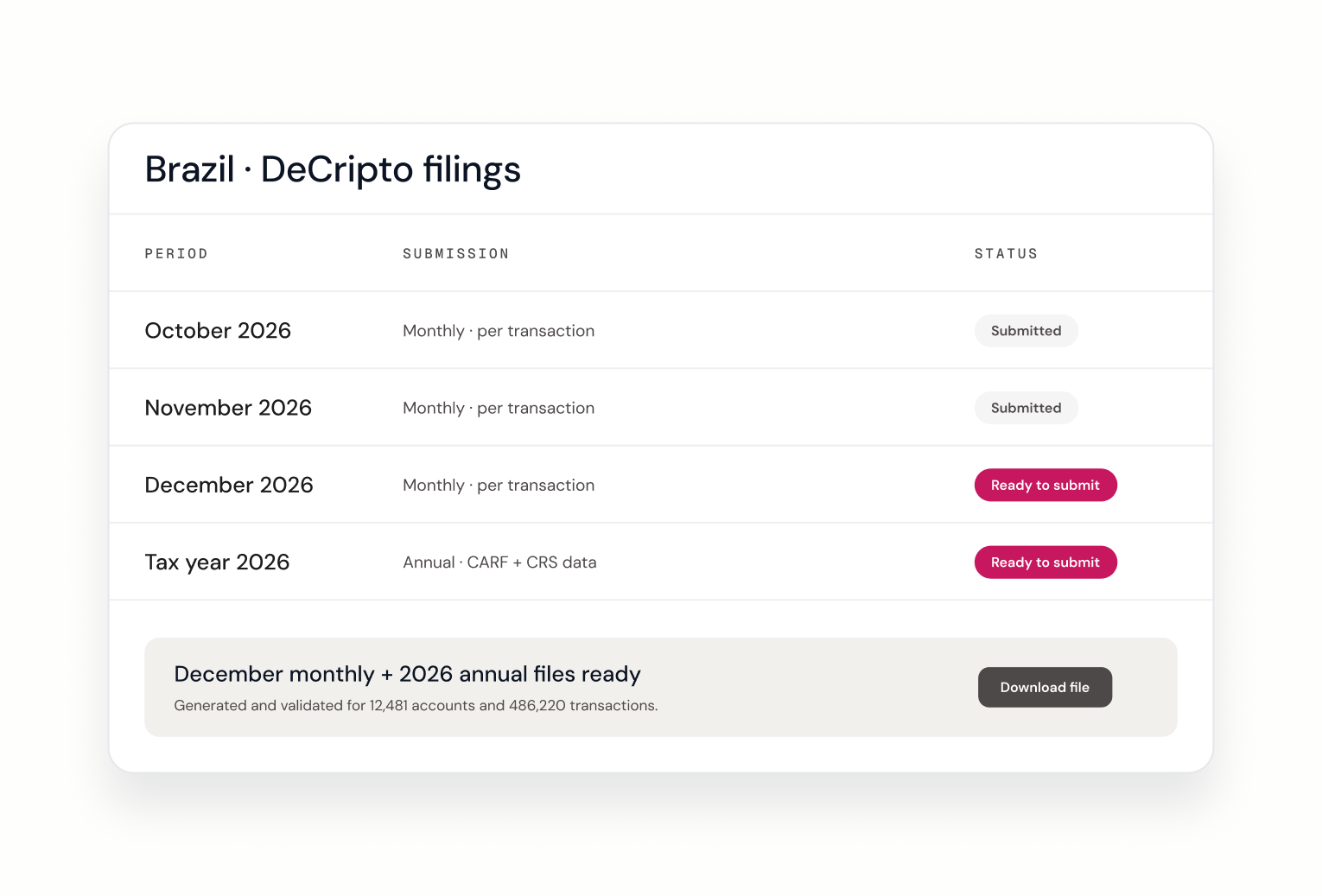
Every check produces a full record of the identifier itself and whether the payee certified it. An invalid or uncertified TIN or VAT can make an account subject to backup withholding, and that status is visible before a form is ever filed.Zero Hash delivered 65k+ forms 100% on time, with a 95.4% TIN match rate.
"Taxbit's shared commitment to building trusted infrastructure, combined with their deep tax expertise… gives us confidence that jointly we will deliver for our customers and regulators."
Edward Woodford · CEO & Founder, Zero Hash

TIN matching, answered.
TIN matching is the process of checking a taxpayer identification number, such as a Social Security Number or Employer Identification Number, against the records held by the issuing tax authority to confirm the name and number combination is valid. Taxbit runs TIN matching against the IRS in real time, rather than waiting until a form is filed to find out a TIN is wrong.
Real-time TIN validation checks a taxpayer identification number at the moment it is collected, typically when an account is opened, instead of in a year-end batch. The two checks differ by geography: US TINs are matched against the IRS's own records, while foreign tax IDs are validated by format, confirming the identifier is well formed for the jurisdiction that issued it. Taxbit runs both for new accounts, and can re-run them across an existing customer book.
A VAT number is the identifier a business registers for in a VAT jurisdiction. Validating one means checking that it is well formed for the country that issued it, so a malformed number is caught before it reaches a filing. Taxbit validates VAT numbers by format in the same step as its TIN checks, because both answer the same question: is this identifier good. That is the whole of it. Taxbit does not prepare or file VAT returns, and VAT reporting is not part of the platform. The check against an authority's own records is the one that runs on TINs.
A TIN caught wrong at onboarding costs nothing to fix: the customer can be asked to correct it before any form is filed. The same bad TIN, found after filing, becomes a correction, a B-Notice, and potential penalty exposure, which is why the check runs when the number is first collected.
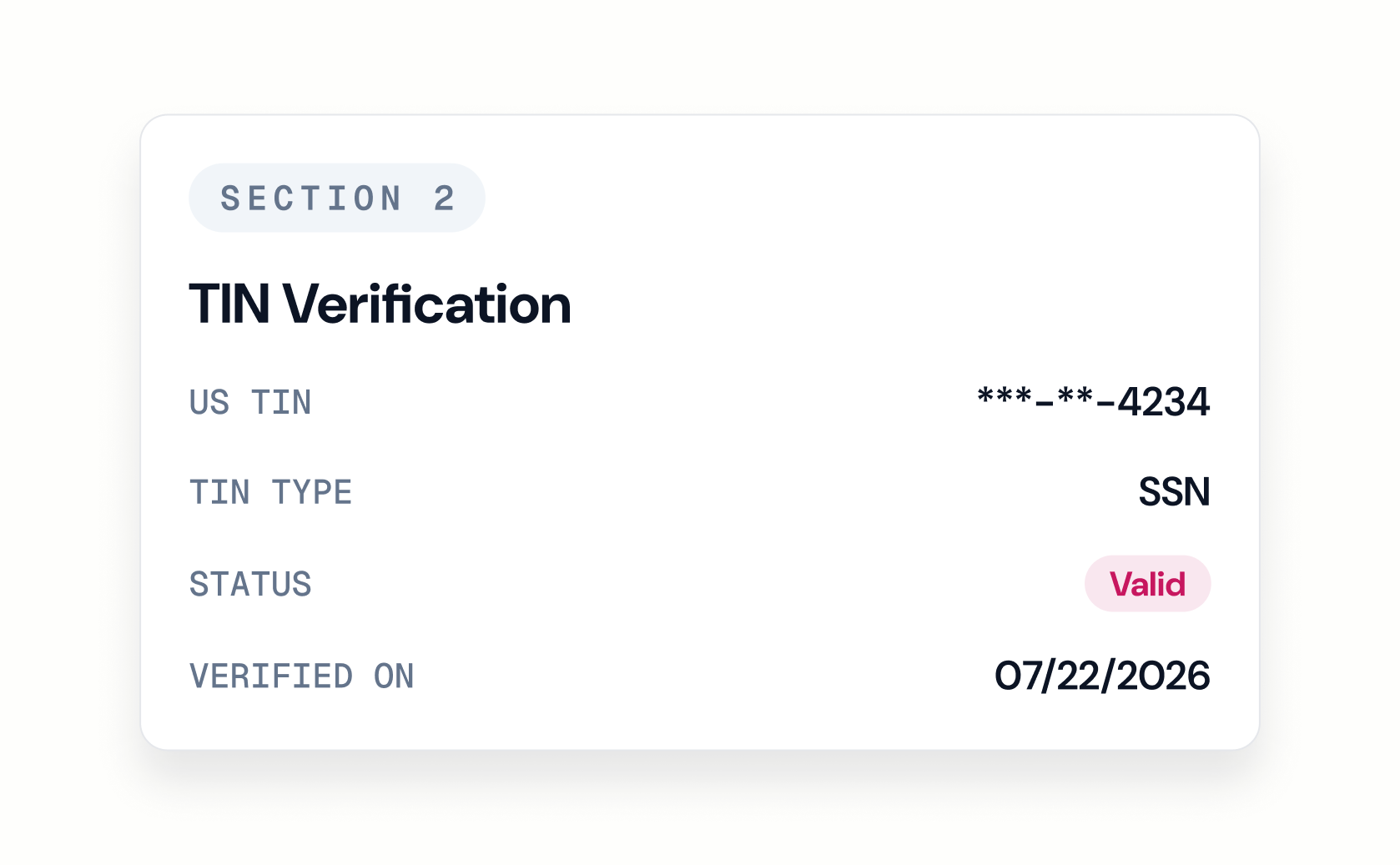
Both. Taxbit automates verification of US and foreign tax IDs for new customers at onboarding and for the existing book on an ongoing basis, so accounts opened before verification was in place don't carry that risk forward indefinitely.
For each account, Taxbit shows the masked US TIN, the TIN type (for example SSN), the TIN status (valid or invalid), and the date it was last verified, alongside whether the payee has certified the number, whether they are subject to backup withholding, and the signature name and date on file.