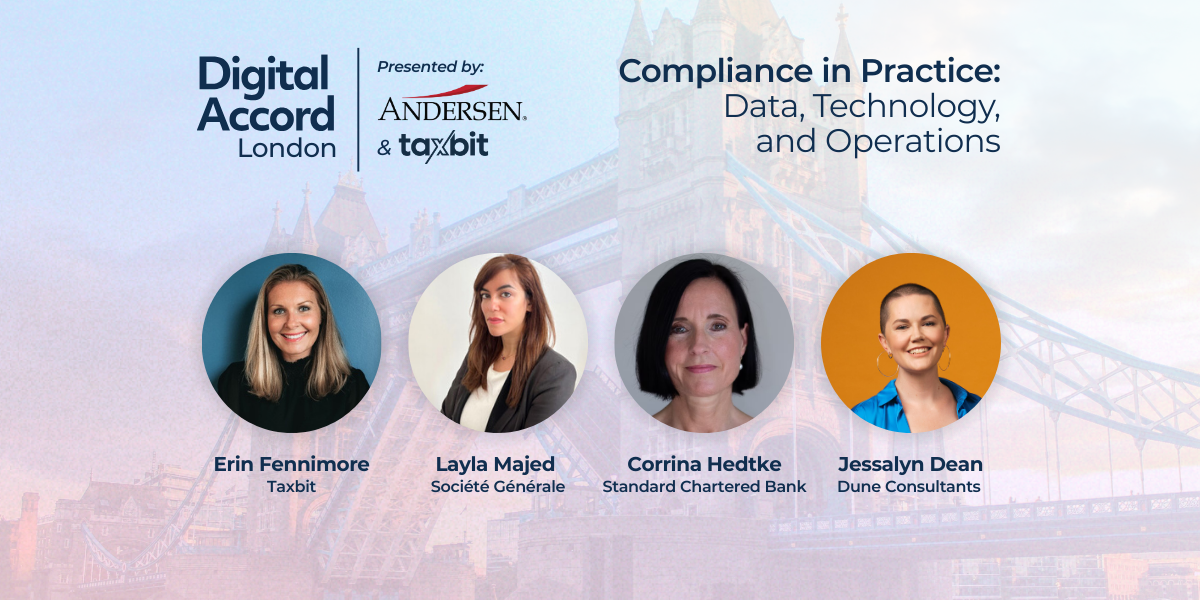
CARF, DAC8, and the revised CRS rules are no longer abstract frameworks — they’re about to impact real systems, real customers, and real data. This on-demand panel brings together global banks and crypto-native firms for a candid look at what operational readiness actually requires.
Hear directly from leaders at Standard Chartered Bank, Société Générale, Dune Consultants, and TaxBit as they break down how firms can move from interpreting the rules to building the controls, processes, and data architecture to comply with them.
Watch this on-demand panel to understand:
Key Takeaways
-
Due diligence ≠ KYC: From 1 January 2026, firms will need tax-residency-level data — including self-certifications, TINs, entity classifications, and controlling persons — to know where to report. Many crypto-native firms haven’t built for this yet.
-
CRS experience helps, but isn’t enough: Banks can leverage existing CRS workflows, but CARF introduces new complexity for entities, tokenised products, multi-booking models, and clients appearing across multiple business lines.
-
Jurisdictional divergence matters: EU DAC8, UK CARF, Swiss timelines, GCC adoption — all are moving on different clocks. Global groups must document country-by-country variations rather than applying a single “strictest rule” globally.
-
Data is the real bottleneck: CARF requires granular transaction-level reporting, not just balances. Firms must map products, wallets, and transfers — and classify assets like stablecoins or tokenised instruments — before reporting engines can run.
-
Build vs. buy will shift under CARF: Unlike CRS, where many firms built internally, CARF’s complexity will drive hybrid models: internal tax/product analysis paired with specialist reporting technology.
-
Customer communication is critical: Without clear explanations for why more data is needed — or why activity may be restricted without a valid self-cert — firms should expect customer friction.
-
The core message: CARF may still have grey areas, but waiting for “final-final” guidance is a risk. Compliance, tax, product, and data teams need to collaborate now to meet the timelines.
Panel of Experts
Corinna Hedtke – Standard Chartered Bank
Jessalyn Dean – Dune Consultants
Layla Majed – Société Générale
Erin Fennimore – Taxbit
.png)